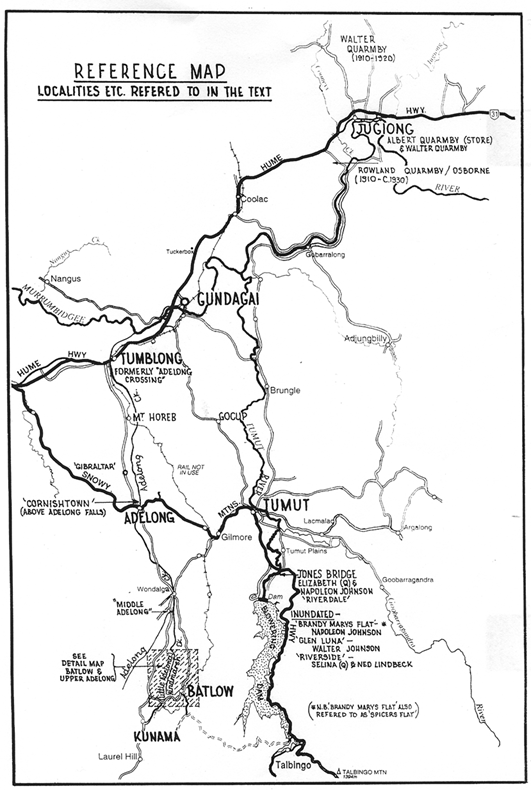
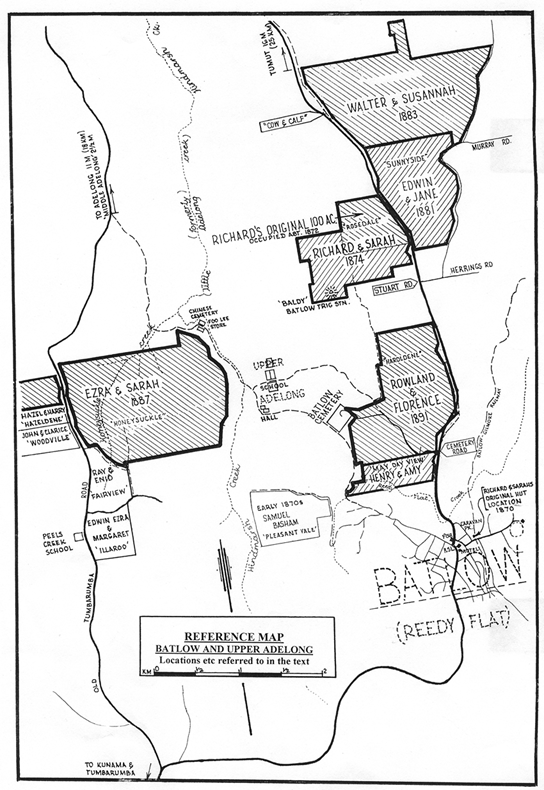
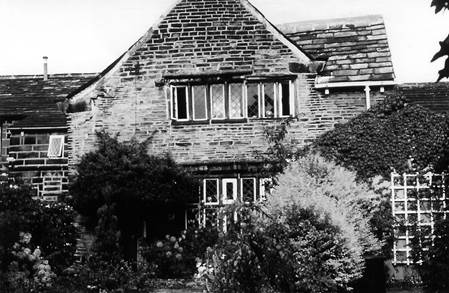
1851 U.K. census, just 1 year before Richard
Quarmby left for Australia, Joseph had
died leaving Mary Ann as head of the household.
They were in Lockwood, another parish in Huddersfield, and another name
in the “Eland Tragedies”
Head – Mary Ann Quarmby,
widow aged 45 born Melthan, another
suburb, occupation domestic duties.
Richard – unmarried son aged
24, born Linthwaite occupation watchman (police)
Henry – unmarried son aged
22 born Linthwaite – occupation – weaver
Ezra – son, aged 14 born
Linthwaite, occupation silk piercer
Elizabeth – daughter aged
11, scholar born Linthwaite
Edwin – son aged 8 scholar born Linthwaite.
Their address being a street named
Spring Mill.
N.B. Ruth not recorded in this census.
The marriage date of Joseph
and Mary Ann is not known but records show they had 6 children of which Richard
was the eldest
Records of Linthwaite Parish
Church started in 1828 when the church was new.
Baptism(not birth dates) of
the children were -
- Henry 25/12/1828 - Ruth 14/11/1830 -
Edwin 9/2/1845
It has been stated that Richard was born on
the 28th of April, 1826.
Australian Research – Ken and Joan Quarmby,
2002/3
1850 Two
cousins of Sarah and Jane Edgar arrived in Sydney on the Loyds
29/6/1850. Robert Ritchie was 24 and
John was 22. They came out as farm
labourers and could read and write. They arrived assisted passage, to an Uncle
James Ritchie residing in Sydney, in 1850. Paid 2 pounds. We could not find an
address for James in Sydney.
Information from the N.S.W. Archives, Kingswood, – Assisted Immigrants.
1852 February.
Mary Ritchie (nee Alexander) Jane and Sarah Edgar’s Aunt arrived on the
immigrant ship Joseph Somes on the
3rd February 1852 - Sydney. She was a
widower, aged 46 and arrived with 7 children: Joseph 29, Alexander 23, Margaret
27, William 19, Henry 17, Elizabeth 15 and James 14. They were all farm servants and could all
read and write. Mary (and family) went
to her two sons John and Robert who were in the employment of Mr. H. Osborne,
Wollongong. The cost was 15 pounds for
the family as “assisted immigrants”.
The National
Maritime Museum in Sydney sent the following information
Colonial Clippers by Basil Lubbeck
states:
“By
June 1852, fifty ships
were lying in Hobsons Bay (Melbourne) deserted by the crews. Nor were other
Australian ports much better. The mail
steamer Australian had to be helped away from Sydney by a detachment of
volunteers from H.M. brig Fantome; and at Melbourne and Adelaide, where she
called for mails, police had to be stationed at her gangways to prevent
desertion, whilst at Albany she was delayed seven days for want of coal,
because the crew of the receiving ship, who were to put the coal aboard, were
all in prison to keep them from running off to the diggings.
Some description of
Melbourne at this wonderful period of its history may perhaps be of interest.
“From the anchorage, St Kilda showed through the
telescope as a small cluster of cottages, whilst across the bay a few
match-boarding huts on the beach stood opposite some wooden jetties. Williamstown, indeed, possessed some stone
buildings and a stone pierhead, but in order to get ashore the unhappy emigrant
had to hire a boat. Then when he at last
succeeded in getting his baggage on the quay, he had to guard it himself, or it
would mysteriously disappear. Melbourne
itself could either be reached by a river steamboat up the Yarra Yarra, which
at that time was not more than 25 feet wide in places. When emigrants began to arrive in such
numbers as to overflow, the beach became covered with tents and shacks and was
known as “Canvas Town”. Houses were
mostly wood and one story high. With the
exception of Collins, Bourke and Elizabeth streets, which were paved, the
streets were merely narrow muddy lanes and there were no foot pavements. In the wet weather these lanes became
torrents of water and many a carter reaped a harvest-taking people across the
road at sixpence a time. Lucky diggers,
down on the spree spent all their hard earned money.”
1852 Yackandandah town
established
1852
October
- Richard Quarmby arrived on the James Carson
- James Carson - Master Patrick Agnew - 1189 ton, - to Port Phillip, departing
Liverpool, England 9/7/1852. The ship carried 392 migrants.
- Passenger list included Richard Quarmby aged
37(could be 27?), labourer, scotch
- This is the only written record of a Quarmby arriving in
Australia until 1857
- Note: Passengers who
came out as ‘steerage’ were seldom listed either in England or on arrival
in Australia
The James Carson was an extremely fast
sailing ship which departed from Plymouth, England on the 9th
July 1852. This ship was badly damaged
and completely dismasted on route from England.
It was re-rigged at sea by all hands (crew and passengers) to successfully
complete the voyage (but with considerable difficulty). It arrived Hobsons Bay
almost a wreck.
The daily diary of
passenger William Tomlinson of England gives a graphic and detailed
story of the James Carsons voyage out
including complete coverage of the disastrous dismasting soon after crossing
the equator.
Sunday
22nd August, 9am A pretty
mess we are in. Although so fine and
clear a morning at ¼ to 11 a squall suddenly caught us when we were carrying
all sail at full and 13 to 14 knots per hour.
Everybody was startled by hearing a sudden crash then another and
another. Everybody looked bewildered for
a few moments and stood as if stupefied looking as the masts came tumbling
down There was a rush made to get below
out of danger. Our foretop mast first
went then her top gallant and royal masts, then the main top gallant and royal
mast bib boom and flying jib boom part of the bowsprit whisking booms,
guyrails, rigging and gear all over the starboard side. It was really a dreadful sight to
behold. The ship lying over to leeward
almost on her beam ends….. it was indeed an awful wreck – stringings, riggings
and ropes as thick as a mans arm snapped like pack thread and all was done in
about ½ minute. The masts as thick as 2
or 3 men were snapped asunder like twigs.
The diary goes on to record
that everyone on board had to work with whatever skills they could offer to
save the ship and to get it re-rigged sufficiently to resume the journey –
albeit with great difficulty. (a near absolute disaster for ‘Quarmbys in
Australia!)
Tomlinson departed the ship
on Wednesday November 3rd and his diary for that day notes “all hands have left the ship except the 1st
and 2nd mate and the carpenter and captain”
His diary continues. Thursday
19th May 1953. The Hellispont
steamer arrived from London yesterday in 75days having been only 25 days under
steam the whole passage.
The James Carson was laid up in Hobsons Bay from 28th
October 1852 till 11th April 1853 (6 months) while repairs were
effected. She sailed direct for Bombay
on 19th April 1853 with her cargo still in tact. Did Richard stay on as the carpenter to help
with repairs while the ship was in dock?
This circumstance would
accord with the long term ‘family legend’ that Richard was ‘caretaker’ of a
ship for 6 months when crew abandoned for the gold fields.
Reference:A diary by William
Tomlinson in the Latrobe Library, Melbourne -
the account of the journey from England to Australia.(access to this
document is appreciated)
1852 December - Part of diary dated Dec. 26
1852 written by Thomas Henry Severn to his father in England, states:
I landed in
Melbourne port and went by steamer to Melbourne, which is about 10 miles from
where we were anchored.
“It cost me 2 pound to land
with my luggage and all, for labour is so expensive. Entering the town, it seemed so queer and
strange – my chum and I went and walked about, after we had got our luggage
stored – we were quite bewildered. ‘We
went to a lodging house and there were two beds – mind I say beds because a
room is a thing impossible to get. These
beds were in a room where 12 slept – and I hear there are some houses where 20
sleep together in a room. We took these
beds and paid 3/- each for them, and we then had dinner 2/-. After dinner I walked in the town …..I went
to the tents – or “Canvas Town” as they call it. I should think there must be nearly 1000
tents and it looked for all the world like Eden in the “Martin Chuzelwitt” of
Dickens”.
He goes on to say that it was a horrid place and where
he never hoped to settle. Dysentery had
carried off a great many and the water was bad and the flies plentiful.
Gentlemen wore veils as well as the ladies to keep the dust and flies away. Dogs very numerous. “Every
one is on an equality here and the only thing that I am not obliged to keep up
any great appearances here. I can wear
what I like and no one looks at you. I
shall become a rough and uncouth being”.
He decided that he would return to England as soon as
he had saved enough money.
(despite all this he married in 1854 in Melbourne)
This would have been the
scene when Richard arrived two months before.
1853 June
-Jane and Sarah Edgar arrived in Sydney
on the Australia. This was an
assisted immigrant ship, which had sailed from Plymouth. She arrived on the 8th June 1853.
Among listed passengers were:
- Name: Eagar,
Jane, 17, Farm Servant, Drummore Co Tyrone, Ch of E., could read
- Name:
Eager, Sarah, 19, Farm Servant, Drummore Co Tyrone, Ch of E., could read
Parents, name,
residence: Thomas and Matilda.(nee Alexander)Edgar. Father dead.
Mother living in Drummore
(Northern Ireland)
§ To whom in the colony: Aunt Mary Ritchie arrived per “Joseph Somes” 1852
Their Health was
good. Paid 1 pound each
(It has been
previously stated that they arrived on the London
but no official record can be found to
support this belief.)
1853 October – Australian National Maritime Museum states that the
only time the London was out of
service was for 2 months, October to December 1853. It was in Melbourne due to
refit. After refit the ship commenced
coastal passenger trade with first arrival into Sydney on 15th
December 1853.
The London arrived in Hobsons Bay, Melbourne
on the 10th October 1853, from Dundee. It was immediately sold (and the crew
paid off) to the ‘Sydney to Melbourne Packet Co’.
1853 December - Sydney Morning
Herald 13 Dec 1853
The Sydney and Melbourne steam Packet Companies
steamship ‘London’ arrived here yesterday at 9am under command of W. Watts late
of the ‘Helespont’. This vessel steamed
from Port Phillip against a heavy head wind, and was some hours longer than
expected on the passage. Captain Watts
started from Hobsons Bay on Sunday morning, with but a small crew. He had only one officer; and was several men
– sailors, fireman, and stokers – deficient, and has consequently, with his
chief officer, engineer &c., been compelled to remain on deck night and
day. The engineer had to act as
engineer, coal trimmer, stoker &c.
The passengers, on his arrival, presented Captain Watts with an address
which will be found at foot, congratulating him on the command of so splendid a
ship as the ‘London’. We have
ascertained the ‘London’ was about six months since fitted with new boilers,
and thoroughly overhauled in machinery and hull, under Lloys surveyors, who
reclassed the vessel……………. It will be
seen by our advertising columns that the Company has laid this vessel on for
Melbourne, to run alternate weeks with the Helespont, and will leave on her
first trip on Wednesday next.
Richard was not listed as crew when she arrived in
Sydney on the 13th December.
N.B. We could
not find any record of Richards activities in Melbourne from October 1852, to
February 1854. He may have spent 6
months on the refit of the James Carson then
time on the refit of the London. (or maybe went to the goldfields)
1854 Richard Quarmby joined the crew of the Hellespont in Melbourne as a fireman
/British. This is the first record found
of Richard working in Australia.
The
Hellispont arrived in Sydney on the 6/2/1854. Richards’s age was stated as 28.
He worked on the Hellispont until the 1st May
as a fireman (from Yorkshire)
He then worked 2 trips on
the London,* 22nd May and
the 5th June. Then on the
Hellespont for one trip, then
back to the London from the 3/7/1854
to the 24/2/1855.
He then joined the crew of
the Wonga Wonga as a fireman/scot.,
from the 2/10/1855 to the 18/12/1855. Richards’s age on the last trip was
stated as 23.
(There is a gap of over 7
months in this period that we cannot
find records for him i.e. 24/2/1855 to 2/10/1855).
It is interesting to note that his name was
often listed as Quanly, Quarmly, Quarmley, Quarnby, and his age ranged from 23
to 32. Mostly 28. Always listed as R. for Christian name. He
was either from Scotland, England or Yorkshire!
*He married Sarah Edgar on
the 23rd May 1854 at the Wesleyan Church in Princes St, Sydney the
day after arrival of the London. He
then returned to crew work on the Sydney/Melbourne run. (Princes St was
demolished to make way for the approaches to the Sydney Harbour Bridge). The
Marriage certificate doesn’t state their ages. The minister who married them in
the chapel also lived in Princes street.
Extract
from The Ovens and Murray Advertiser. Yackandandah, January 1855
We were informed that on Wednesday evening the water
rushed down a little creek on the side of Osborne’s Station in so great a
volume as to carry with it a considerable portion of the paddock fence. Damage to miner’s operations at Osbornes Flat
amounts to 2000 pounds.
1855 Melbourne Archives -( the family move from Sydney to Melbourne)
Yarra
Yarra passenger list 29th November 1855 Sydney to Melbourne
(part)
|
Name of Passenger
|
Age
|
British or foreigners
|
|
Mrs. Quarmby
|
28
|
British
|
|
Jane Eagar
|
32
|
British
|
|
Richard Quarmby
|
35
|
British
travel – steerage
|
( most steerage passengers
were listed when travelling between Australian ports).
Richard made 9 trips on the
Wonga Wonga as crew from Melbourne to Sydney.
On one trip he arrived into Sydney on the 26 November, picked up Sarah
and Jane and they traveled steerage to Melbourne on the Yarra Yarra arriving 29th November, then he returned to
Sydney as crew on the 6th December, finishing up on the 18th
December in Sydney. It would be
interesting to know where they lived in their short time in Melbourne.
1856 Sarah fell pregnant with Matilda about March
of this year. Sometime during this period Jane Edgar met Henry Harrison who
already owned the hotel at Osborne Flat, Yackandandah.
One would presume that they traveled by coach
to Belvoir, Victoria, where Jane Edgar married Henry James Harrison in the
Presbyterian Church on the 11 September 1856( Belvior was the original name for
Wodonga), Sarah and Richard were witnesses at the wedding. Henry had a hotel at Osborne Flat called the
‘Crystal Palace’ which boasted of: “Wines
and Spirits of the finest quality at Moderate prices, and excellent
accommodation for travelers. Good
Stabling”.
In this year
Matilda was born to Richard and Sarah Quarmby at Osborne’s Flat on the 19th of November 1856. Her birth
certificate states that Richard was a miner aged 30. Sarah aged 21 – Yackandandah. Sarah was 7 months pregnant when Jane married.
By the time they all arrived at Osbornes Flat from Wodonga
Sarah probably stayed at the
hotel until the baby was born.
With the advent of
gold during 1854-55 a large number of miners and businessman settled in
Osborne’s Flat and the town grew to quite a size.
Osborne’s Flat derived its
name from an Irishman, Mr. James Osborne, who was one of the first white man to
settle in the area in approximately 1840.
Mr. Osborne owned most of the country
between Burarong and Allans Flat, the run in area totaling 17,920
acres. With the advent of gold at “The
Woolshed” in 1852, diggers swarmed all over the area and in 1854 gold in good
quantities were found in the Osborne’s Flat area along the Yackandandah Creek.
Osbornes Flat is further
downstream from Rowdy Flat and is still marked by a school, church and Public
hall (though these are not at the site of the original township having been
rebuilt on higher ground about 1874)
A History of Osbornes Flat
written by Alice Monagan about 1920, (apparently for a school project.) as
dictated too, and written by, Mr. Michael O’loughlin. Published 1974, states:
In
the late 19th century among the constructions existing were a small
store, owned by J.B. Carkeek, which sold patent medicines, opposite this store
a hotel owned by Mr. Quarmby.
From the Yackandandah
Historical Society – “the reference to
opposite this store a Hotel owned by Mr. Quarmby could be a reference to the ‘Crystal Palace Hotel’ referred to in other
publications as Henry Harrison’s.”
(Ken Quarmby recalls that his Aunt Dorry Quarmby often mentioned that
Richard was associated with a pub at Yackandandah and he was “very popular”)
1856 Electoral Rolls 1856 -
Henry Harrison, Yackandandah, Publican, business license.
Mining wardens register
index states Harrison Henry James, Yackandandah. Complaint No 69.14.
No name of Quarmby on the
Electoral roll
Indications are that Henry
Harrison had been living at Yackandandah for at least a year prior to his
marriage as he had the ‘Crystal Palace’ established. (It is not known when
Henry arrived in Australia.)
Richard may have worked or
managed the hotel. The license was in
Henry James Harrison’s name.
1857
- subheading Osbornes Flat - Henry James
Harrison ‘Crystal Palace Hotel’
- No cemetery records for
Quarmby
- No list of
business and professional names for Quarmby
Quarmby
John, age 19, Feb 1857 Shooting
Star, Pt Phillip. Occupation :
Cloth finisher.
We could find no further
record of his person in Australia.
1858
- Elizabeth Quarmby was born on 21/1/1858 at Osbornes Flat, Vistoria - not
registered
1859
- Edwin Quarmby was born on 24/6/1859 at
Osbornes Flat, Vistoria
1860
- Walter Quarmby was born on 4/10/1860 at Osbornes Flat, Vistoria (No record of
registration but the two boys were baptised
in the Anglican Church at Yackandandah.)
Henry James Harrison had a son who died at
6 weeks - Osbornes Flat on the 25/1/1860. No
record of Henry and Jane’s
children attended school there.
Richard, Sarah and family
apparently departed Osbornes Flat in 1860 or 1861 for the Kiandra Goldfields as
the next record (1862) have them at New Chum Hill, Kiandra. Travel possibly
through Reedy Flat (Batlow) or Tumut to reach Kiandra.
1862 – 1868 children
born to Richard and Sarah at New Chum Hill, Kiandra
1862 Selina
Maria 25/6/1862
1864 Ezra William 30/4/1864
1866 Sarah (Lavinia) 4/9/1866
1867
July 7th – An article in the Tumut Adelong Times 1867 records an
accident involving Richard Quarmby at the “Homeward Bound” Claim at New Chum,
Hill
The 4th of July
has come and passed away once more, and I regret to add that I am not enabled
to devote this communication to describing such sports and amusements as in
general have taken place hitherto amongst our local Americans.
Instead of the foregoing it
has fallen to my lot to be the narrator of a sad and fatal accident which
occurred on the morning of the above date, in the Homeward-bound claim, New
Chum Hill, whereby a miner, named Patrick McKeown, lost his life. The following, which is about the sum and
substance of evidence taken at an inquiry held by J.M. Lett, Esq, J.P., will
explain the nature of the accident:-
It appears that McKeown and two others –
Quarmby and McPherson, had proceeded as usual to their daily labour opposite a
face of earth about thirty feet in height, which had been undermined; this they
carefully examined previous to commencing operations and the whole of them
pronounced themselves satisfied as to its security. They had not worked long, when a portion or
corner of the mass fell. It was again
inspected and they were unfortunately again re-assured as to its safety. Work was resumed, and about two minutes had
elapsed, when McPherson, upon looking up, discovered that the whole had given
way and was, in fact, almost over them; he immediately gave the alarm and
sought self-preservation. He luckily
escaped injury, having only been knocked down by some of the earth coming in
contact with him. He was quickly on his
feet again and looked around, to see how his companion had fared, saw Quarmby
lying with a lump of clay across his legs, and only one of McKeown’s arms
visible. Assistance was quickly rendered
by the rest of the mates who where working in another portion of the claim, and
both men speedily extricated. McKeown
was carried to his residence close by, and expired in about two hours and
a-half after the sad occurrence.
A gloom
seems to be cast over the spirits of the community by the untimely end
of this young man, as in general he was much liked. It is considered a miracle how any of the men
escaped, especially Quarmby who was supposed to be
working in the most dangerous position, and who received some severe bruises’
whilst on the other hand poor McKeown
had the best chance of escape. It is the
general opinion that he must have lost all presence of mind and became
spell-bound or fascinated with the impending danger, and therefore made no
exertion to save himself.
The funeral took place on the
6th instant, and was numerously attended considering the inclement
state of the weather. There were upwards
of sixty persons in the procession, a number of whom had traveled a laborious
journey of nine miles through from two to three feel of snow, to pay their
last sad tribute of respect to the
memory of the deceased. The funeral
service was read by Mr. James Barclay, Junr., in an impressive manner, assisted
by Mr. W. Bourke. Truly this scene will
long be remembered by those who witnessed it, the solemn procession wending its
way through the deep snow with the same element thickly falling around them
1867 September – Henry John
(Harry) was born on the 21st at New Chum Hill.
1868 Rowland Edgar was born on 15/11/1868 at New Chum Hill.
Richard’s occupation when Rowland was born was shown
as a miner. He was registered at Cooma
on the 11 January 1869
Reference regarding the Quarmby family was in an
application for a school at Kiandra. Letter of application stated that: “there are many other families residing
within a few miles who would gladly send their children, was a school once
established. August 1867
Matilda J. Quarmby aged 10,
Elizabeth Quarmby 9, Edwin J. Quarmby 8, W.R. Quarmby 7, C.M. Quarmby 5, they
lived 1 ¼ miles from the school.
Guarantors for the 30pound,
for the erection of school house etc, were John M Lett J.P., Boyd Horsbrugh
J.P. and George Atkinson.
1869 Richard, Sarah
and their nine children then traveled to Reedy Flat (later named Batlow) and
had four more children. Richard was still listed as a miner.
1870 Frederick Thomas Quarmby was born on 3/7/1870
at Reedy Flat.
1872 Richard- always
known as Herbert (name change to Herbert Mellor in the 1930’s) was born on
5/7/1872 at Reedy Flat. In this year, Jane and Henry Harrison and children
arrived in Reedy Flat (Jane being Sarah Quarmby’s sister) from Victoria.
1872 also saw Richard
and Sarah Quarmby taking up their first 100 acres at
Reedy
Flat, on the Tumut Road. An original land map of 1874 at the Kingswood Archives shows Richard’s land. He “took up
100 acres on the Tumut Road”. Mystery
has always surrounded this well known fact, as there was never any property
title registered in Richards’s name. A
simple solution has emerged.
Crown grants could be
obtained though a system known as Conditional Purchase. An approved applicant to the Lands Department
could obtain acreage’s (available at Batlow for 1 pound per acre). Five shillings per acre was required as
deposit and the balance could be paid free of interest within three years or at
interest rates thereafter.
Papers of assignment of
Richards’s estate - State Archives,
Kingswood - (on his death in 1884) gave us the clue. His interests included the original C.P of
100 acres and 4 others of 40 acres each – total 260 acres. These documents ratify the transfer to Sarah
Quarmby, his widow.
Search of the original C.P.
Registers from the Lands Department now
held in the State Archives Kingswood, gave the answers. Richard only maintained the necessary annual
repayments to retain the land and never completed the purchases – hence he
never held a certificate of title for the property ‘Rosedale’.
The conditional purchases
were completed – for 160 acres (4 x 4-acre blocks) by Sarah Quarmby in 1905,
and for the original 100 acre block by Herbert Mellor Quarmby in 1914. Titles were issued in those names
respectively and copies are held in family records.
1874 Albert Charles
was born on 10/3/1874 at Reedy Flat.
1878
Maud
Helina Grace was born on 12/1/1848 at Reedy Flat.
1878 Quarmby Henry age 50 Dec, 1878 Aconcaqua, arrival - Pt Phillip.- is he
Richard’s brother?
1881 Henry married Ann
McCallum 1881 – Paddington, Sydney.
1884 Richard Quarmby died at St Vincents Hospital
in Sydney from Carcinoma of the lower end of ascending colon. He had been ill for 2 months. Death
Certificate shows his mother was Marian Miller and father was Joseph Quarmby
Born Yorkshire
England. Richard had lived in the colony for 32 years. Walter Quarmby, his son from Reedy Flat, was
present at his father’s death.
Buried Rookwood Cemetery grave no 803 Section R.
1884
Walter Harrison married Mary E. Broome in
Adelong
1888 Emma Harrison (Jane and Henry’s daughter )married William Broome at
Reedy Flat
1889 Reedy Flat officially proclaimed BATLOW, the
reason being that there were 3 localities in N.S.W. known as Reedy Flat.
1896 Henry Quarmby died at Parramatta in 1896. His death certificate states that his father
was Richard and his mother Mary Miller. (Fathers occupation was a weaver). He was living in Isabel St, Parramatta at the
time of his death. His wife was Ann McCallum and she was his second wife. They did not have any children. Ann could not
write. It appears that Henry had eight children by his first marriage (probably
in England).Records show all were deceased at the time of his migration to
Australia.(His fathers name may have been recorded incorrectly by his wife)
1896 Henry Harrison died on the 2Oth
September 1896 aged 76 years and 9 months.
Death certificate stated that he arrived in Batlow about 1874. Ezra Quarmby was a
witness at the burial at Batlow cemetery – unmarked
grave.
1915 Jane Harrison (nee Edgar) died on the 30th
October 1915. She is buried in an
unmarked grave at Batlow
1919 Sarah Quarmby
(nee Edgar) died on the 4 August 1919 and is buried in Adelong Cemetery
It is very apparent that the
Edgar sisters, Sarah and Jane must have been very close. Two young Irish girls
leaving Northern Ireland for the unknown Colony and thereafter sharing the
difficulties of life in Sydney– moving together to Melbourne, Yackandandah, and
again with their families, joining up in Reedy Flat, (Batlow) for the rest of
their lives.
They must have been very
special ladies!
UPPER ADELONG
The Boom Town that vanished
It was Gold that attracted
so many people to this remote and desolate part of southern N.S.W. in the
1850’s, before the discovery of gold at Reedy Flat in 1854. Goldfields on the Adelong and Little Adelong
Creeks had attracted all nationalities including some 800 Chinese. Sections were known as Yankeeland,
Germantown, Irish Point and Chinkey Town.
The miners sluiced for gold along
the banks of the creek.
The mining settlement of
Upper Adelong was located on what was originally called Little Adelong Creek,
now known as Hindmarsh Creek and was overlooked by ‘Baldy mountain’ (on Richard and Sarah Quarmby’s property
‘Rosedale’) where “Batlow” trig station
is now sited.
From Batlow – “The growing years from
Gold to Apples”
“The
settlement/area had two or three thousand people who lived in the Upper Adelong of the 1850’s and
60’s, their homes slab and bark huts and calico tents erected for the new
arrivals…..The creek once cyrstal clear was dark and muddied by sluices and
mining machinery.”
Virtually the whole length
of Little Adelong Creek was extensively mined and Upper Adelong became the
community centre for all this activity.
Travelers from Adelong to
Upper Adelong followed the Tumbarumba coach road through Middle Adelong where
the road crossed the main Adelong Creek.
Approximately 2 ½ miles up the steep “sawmill hill” from Middle Adelong,
the track turned left off the Tumbarumba Road and dropped down across
Honeysuckle Creek to Little Adelong Creek, which it followed in a very erratic
fashion to the settlement. Workings all
along the creek meant the track was constantly shifting and was never properly
formed. The track continued a further 3 miles from Upper Adelong, up a steep
climb past the present cemetery and across “The May Day,” to join the Tumut
road in Reedy Flat, (now Batlow)
People slipped and slid in
the mud and bracken along the track which even the bullock teams must have
found almost impossible. In fact, most
people traveled on foot or horseback everywhere and if they could afford it,
owned a horse and cart. Walking into
Reedy Flat was quite a task.
They came, and they
squatted, and they lived in tents or built their rough timber houses, usually
near the bank of the creek, and began sluicing for gold. Often dwellings
tumbled down into the creek when the miners dug a little too close, and others
were relocated in advance of the workings. These were indeed hard and harsh
times. Our ancestors endured, survived,
and certainly were ‘true blue.’ Nevertheless in those early days Upper Adelong was quite a settlement and had its own school,
hall, provision store and dwellings.
The small hall was used for local dances, a meeting place, and church if
the Minister/Priest was in the area. The Minister would call about twice a year
and bless those who were living in common law marriage, and say a prayer over
those who had died, by the graveside.
Women in those days washed
in galvanized tubs. Coppers were lit
outside in the yard to boil the clothes.
Bath day was usually once a week in a large round tub in front of the
open fire in the kitchen. Daily washdown
were performed in the creek or from an outside bucket.
Everything was hand made, soap, butter,
candles etc. Ladies bought material and sewing items etc from an Hawker (mostly
Indian) who would arrive on a regular basis
carrying their goods by whatever means they could .
The love of music kept
spirits high, mainly the mouth organ or violin (easy to carry). If you owned a piano you were considered
fortunate. Entertainment was often in
the home and it has been said that Sam
Basham had a very powerful voice.
The children looked forward to
Sundays when they would put on their Sunday best a go visit folks, walking many
miles.
Night possum hunts were a very
popular sport in the area and young men would ride in from surrounding farms
for the hunt. Quarmby boys were regular participants.
The Basham’s were among the early settlers in this area. They arrived
in the early1870’s.
The Quarmby’s also settled on the other side of Baldy Hill
in the early 1870’s. Florence
Basham (the youngest of the family) was
a year younger than Maud( the youngest
of the Quarmby’s) – they attended school together at Upper Adelong. ‘Maudie’ walked about 2 miles each way to school along a rough horse track - probably with a couple of her brothers
Research into the early days of education in the
valley revealed that the public school commenced in 1880. Prior to that it is believed that there was a
private school.
The teacher who
had been appointed there wrote:-
To
the Council of Education, Sydney.7/2/1880
Gentlemen,
I have the honour to request that you will be pleased
to remove me from this bleak place to some more genial climate. During the
severity of the winter here the parents of the children decline to send them.
The residence provided for me is neither wind nor waterproof and I am in a
miserable state during the whole of the winter season. Trusting that this application may meet your
gracious approval. I have the honor to be gentlemen, your most obed'’ servant,
J. Kehoe, Teacher.
17/2/1880 It was reported
that the residence of the teacher has fallen in – it was attached to the school
and was formerlly used as a classroom – foundation
rotted away and the teacher still resides in one end of it. The other end being open. Tenders were called in June. Kehoe stayed on and
rented a cottage one mile from the
school.
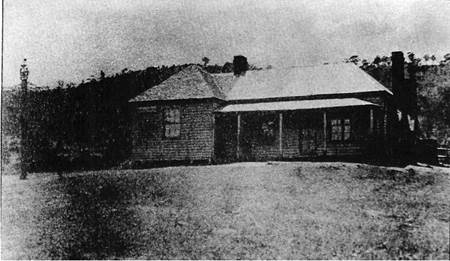 Next teacher was on the 3/7/1881 – John James a well
liked man. It was in this year that Sam
Basham had two children attending the school.
The school had a number of teachers in these early
years.
Next teacher was on the 3/7/1881 – John James a well
liked man. It was in this year that Sam
Basham had two children attending the school.
The school had a number of teachers in these early
years.
Upper Adelong school, 1901
In 1899 there were 24 students attending Upper
Adelong school, and 13 at Uplands P.S.
Small Schools were mostly ‘half
time.’ The list of school children who would attend Upper Adelong should it go
‘full time’ included E.W. Quarmby with
4, Mrs. E.J. Quarmby with 4 and W.J. Harrison with 2. If Jane and Edwins children attended Upper
Adelong it was only for a short time as in 1901 they were attending Batlow. The
list of children who attended ‘Adelong Upper Half Time school’ on 25 October
1899 included:
John Harrison 11 years 9
months, Thomas Harrison 10 years 6
months – distance from school about 3 miles, John Quarmby 8 years
6 months, William Quarmby 6years
6 months, Elsie Quarmby 5
years 6 months - about 1 mile from school, Reginald
Quarmby 8 years – about 1 ¾ miles from
school.
In 1900 the school became
full time but the old schoolhouse was
constantly being repaired and in 1902 a new school building was completed. The
house section consisted of 4 rooms and the school room, attached to the
house, was 17’x15’(feet) with a
weathershed. Mr. A. Watson and Mr. V. Travis lived opposite the school.
1905 Henry James Quarmby
quoted 15 pounds for erection of a new closet.
The tender appeared high but the difficulty of getting materials to the
school site had to be considered.
Fred Bashams wife worked as
a sewing teacher for 5 ½ months in 1909 while the teachers wife was sick.
22/1/1912 saw the school
close due to lack of attendance and a new school to be built at Peels
Creek. Fred Basham (Sam’s son) put stock
on the school grounds from 1913/14 at 10pounds one and sixpence per annum. The school was sold on the 8.10.1918. Demolition and removal of the school,
residence and outbuildings went to John Roland Quarmby of Honeysuckle,
Batlow. Work was completed one year
later.
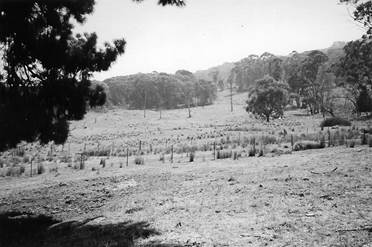 Today there is no
sign of a settlement at Upper Adelong, that is visible to the eye. The track, seldom used, looses itself
amongst the grass – only to surface where a little gravel or remains of a
crossing may be seen. The remains of an old cemetery (headstones) can be found
when the grass is short, up in among the trees.
The land is now private property.
Today there is no
sign of a settlement at Upper Adelong, that is visible to the eye. The track, seldom used, looses itself
amongst the grass – only to surface where a little gravel or remains of a
crossing may be seen. The remains of an old cemetery (headstones) can be found
when the grass is short, up in among the trees.
The land is now private property.
Upper
Adelong site, 2003
taken from school grounds
But it is a
beautiful part of the Batlow area, serene and quiet with the memories of
yesteryear gone forever. Looking at the
cows grazing on the land now, one could never imagine that the little village
of Upper Adelong ever existed, even for such a short and turbulent time. But it needs to be recognised in this
book for it, too, is part of our history
and heritage.
And it has
entirely vanished!
THE HAIGH CROSS (
ENGLAND)
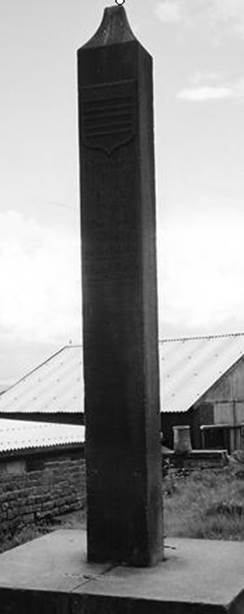
There are many
mistakes/ideas concerning the original purpose for which this Cross was
erected. It is situated in a field at
the end of Crossland Road, Lindley, at the left hand side near its junction
with the Outland – Rastrick Road.
The Haigh Cross is a plain pillar of sandstone about 3 yard high above
its rectangular base, and about a foot square.
It s base consists of two stones clamped together with iron plates: in
the center of the base stone is the socket to receive the pillar. The base is 2 yards square and 8” thick.
On the side facing Outline, in a sort of panel, is the representation
of a Yorkshire red grouse (quite common on Wholestone Moore, near Outland),
regardant, the Quarmby Crest, 1304: under these appear the words Quarmby de Quarmby’s Crest 1304. On the other side, the north eastern, appear
the words “Re-erected by T.T. 1808 after willfully pulled down”.
Little or nothing has been published that we are aware of regarding its
history, but we suspect that it has close associations with the Elland Fued
which took place about this time and in which one of the Quarmbys lost his life
in Ainley Wood, not far away on the slopes of the hill towards Elland.
It seems certain that a destruction of this cross took place in 1807 or
1808. This can be inferred from the
words on the present pillar,”after being wilfully pulled down”. I am inclined to think that whenever it was
hurled down, the cross was so dreadfully mutilated that it could not be erected
in toto. Some hostility to the
Thornhills of Fixby, on whose land the cross then stood, seems to have been
manifested about this time, and may be shown itself in this peculiar
manner. Consequently, Thomas Thornhill,
whose ancestor had purchased the Manor of Quarmby-cum-Lindley from Sir Edward
Barkham is 1634, re-erected it in 1808 and modestly informed posterity of the
fact in these words “Re-erected by T.T. after being wilfully pulled down,
1808”. It was most likely a boundary mark.
The late Mr D.F.E. Sykes in his “ History of Huddersfield and its
Vicinity” gives a hint that attempts were made in the middle of the last
century to remove the cross. He stated
that it was due ‘to the late Councellor John Haigh of Lindley, we owe it that
this ancient monument has not shared the fate of so many other relics of the
past’.’
The Haigh Cross is about 2 miles along the Roman Road east of Clack
where from A.D. 70 to A.D. 125, the Romans had a military camp.
THE HARRISON FAMILY
The Harrisons arrived at Batlow from Victoria with 8 children (a boy had died at 6 weeks in 1860) in 1872 and they resided at Batlow for the
rest of their lives. Their home was initally near the present cannery. They were described as a very honest family.
When the Quarmbys vacated the Pise house in the township of Batlow, Jane and
Henry Harrison lived there for some time. Information from the Batlow Museum
states that all their children were born at Yackandandah in Victoria. It states
that Henry followed the mining boom but
later bought a Hotel. Mrs. Harrison
(Jane Edgar) decided that the hotel was no place to bring up a family and the
gold had been found at Reedy Flat, so with their family they came to live in
Reedy Flat in the year 1872. Their first
home was near where the present Cannery is and they shifted into the home where
Mr. Quarmby Snr, lived (Mrs Quarmby, Sen, was Mrs Harrisons sister). Quarmbys shifted to where now H.G.S. Mouats
property is .
On the death certificate of
Jane Harrison it is stated that she had the following children.
(The Harrison children were born at Osbornes Flat or
Yackandandah in Victoria)
George H. Harrison aged 58
when mother died. Born 1857 not registered
Anna M. aged 56 “ 1859 “
Infant boy 6 weeks (William James) 25/1/1860 Cemetery records
Walter Thomas
aged 54 “ 1861 not registered
Sarah Jane 53 “ 1862 Mother Jane Headgate(should be
Alexander Joseph 51 “ 13/9/1863 “ “ Edgar)
Wallace Bentley 49 “
5/7/1865 Mother Jane EdgarBorn
Yack.
Emma Elizabeth 47 “ 6/7/1867 Mother Jane Edgar “
Vilindia Fanny 45 (Belinda?) 27/8/1869 Mother Jane Edgar “
Father was Henry James
Harrison
It seems that Henry
James Harrison had a brother called
George Henry Harrison
Walter Harrison ( his father was Walter Thomas Harrison) Grandson of Jane and
Henry wrote in 1970 at age 84 about the Mining days at Batlow.
The
first gold discovered in Reedy Flat was at
the Crossing near old swimming pool on the Adelong Creek, by Chinamen
who took untold wealth from there. There
was quite a colony of them settled. They
had their own Store, Butchery business and Joss house place for worship. There was about 800 Chinese miners over
there. Next bit of excitement in Gold find was what is now called The Dyke Reef
gold find discovered by a miner called Paddy Welsh. It was very rich for a
start it employed a good number of men before being unpayable. To much overburden and getting very narrow on
the gold. Getting scarce the miners left one by one - what was left of them turned to growing crops
of one sort and another principally potatoes.
Each miner had his little back yard garden, odd plum tree, apple and
pear .
The man who
started potato growing on a large scale was Mr. Karl Butz Sen. It was then
handed down to others. Mt Butz used to cart to Gundagai when the railway line
first came at that time, then followed up to Tumut. Then others followed up. Mr. Ezra Quarmby Mr.
G. Mouat, Mr R. Quarmby also Mr Barbarie started sending them to Sydney. He grew such good potatoes that it bought
Yates people to inspect them result was they bought the crop in paddock sent
their own men to harvest them. The name
of the potato was Brownel. Also Mr. E.M.
Herring grew extensively. The main
carriers where Mr. H. and K. Butz Bros, then Quarmby Bros, Mr George Mouat,
George Bowden, Rafe and Harry Cottams from Bago. In return back loading they
carted supplies for Timmis and Eyles who had a general store. Also carried on a butchering business purchased
from Wottely. There were others who
carted for Timmis in a small way.
Eyles and Timmis disolved partnership then Mr
Moras Hourigan took over also there was another butcher by name Tom Denson who
left as there was not much trade for two.
He went to Burrenjack from here. As
well as potatoes growing other little industries selling apples, cherries,
rasberries, plums, Damsons etc and
Gooseberries. To start the fruit
growing on a Commercial Business was Mr. Oliver Barbarie a school master but
the first to start back yard orchards was a man called Mouat up where Mr.
Mervin lives then followed Antoyne next, Mr. Sam Basham on the Upper
Adelong. Then Mr Ezra Quarmby. Mr Basham used to cart fruit to Gundagai by
horse and dray and that led to Batlow becoming a fruit growing district.
The
other two businesses of note was carried on by Mr. Copeland Skien who had
the cheese factory and butter. He
used to sell to miners who followed the
gold to Reedy Flat………
Miners
residence then was mostly slabs of stringybark, roofs some shingle or
galvanised iron. Mr Timmis residence
consisted of slabs and was the first to have iron roof flat galvanised
iron. Also there was a blacksmith shop
here….
Newcomers
started to arrive at Batlow Mr Cabban
purchased Rowland Quarmbys property. Then
Mr. A.J. Arnott purchased portion Rev. C. Jones property then Mr. A.E. Herring
bought Stockwell property.
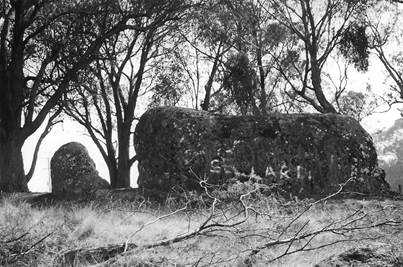 Carriers in those days were Mr H. Butz horse team
Batlow to Gundagai. Mr. Rowland Quarmby,
Mr. Edwin Quarmby had horse teams. Harry
and Rafe Cottam had bullock teams, Mr.
Ben Harris horse team, Mr. Tom Christian Bullock dray. There were a number of small carriers who did
odd jobs.
Carriers in those days were Mr H. Butz horse team
Batlow to Gundagai. Mr. Rowland Quarmby,
Mr. Edwin Quarmby had horse teams. Harry
and Rafe Cottam had bullock teams, Mr.
Ben Harris horse team, Mr. Tom Christian Bullock dray. There were a number of small carriers who did
odd jobs.
Cow
and Calf’ landmark – about 3 miles from Batlow on the Tumut Road
Walter Thomas Harrison married Mary Emma Broom (from Adelong) in 1884 He was a carpenter and believed to be the first undertaker in
Batlow He was born 1861 at
Yackandandah.
Research on the Harrison
family is currently being undertaken by a descendant in Victoria, 3152.
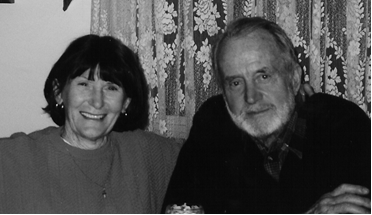 Research has been undertaken in Sydney
and Kingswood State Archives, Mitchell Library,
Maritime Museum of Sydney, Melbourne Archives and State Library, Canberra
National Library, War Memorial Canberra, Batlow and Tumut Museums, Campbelltown
Library, Yackandandah Historical Society. Assistance with the research in Tumut
came from Margaret Buckley, Great grand-daughter of Elizabeth. We must also acknowledge our friends Cliff
Hall and Ida Cole in Bargo, and our sons Stuart, Murray, Neil and
Evan Quarmby for their continued
understanding of ‘mothers plight ’when using new technology.
Research has been undertaken in Sydney
and Kingswood State Archives, Mitchell Library,
Maritime Museum of Sydney, Melbourne Archives and State Library, Canberra
National Library, War Memorial Canberra, Batlow and Tumut Museums, Campbelltown
Library, Yackandandah Historical Society. Assistance with the research in Tumut
came from Margaret Buckley, Great grand-daughter of Elizabeth. We must also acknowledge our friends Cliff
Hall and Ida Cole in Bargo, and our sons Stuart, Murray, Neil and
Evan Quarmby for their continued
understanding of ‘mothers plight ’when using new technology.